
Nagging isn’t the only way to make piano practice part of a child’s day. A practical way to learn how to get a child to practice piano without nagging is to make practice brief, predictable, and engaging. For beginners, 15-20 minutes can provide a focused session without making practice feel like an all-evening task.
It’s understandable to feel frustrated when reminders lead to resistance, especially when you want your child to enjoy music and make steady progress. Pressure can turn practice into a conflict rather than a chance to build confidence, but a few thoughtful changes can shift the tone.
You can bring enjoyable music into practice, offer clear choices within a routine, and praise effort instead of expecting perfect playing. If resistance continues, reconsider the practice material and approach with patience. These steps can make practice more manageable for both your child and you.
Key Takeaways
- If resistance continues for weeks, revisit the practice approach and consider whether the music feels too difficult or too easy.
- Let children help choose enjoyable music to make practice feel more personally meaningful.
- Offer choices about what to play first while keeping the expectation that practice happens.
- Build practice into a predictable daily routine so it becomes easier to begin.
- Notice and praise effort, persistence, and small steps forward rather than focusing only on flawless playing.
1. Adjusting practice when resistance continues
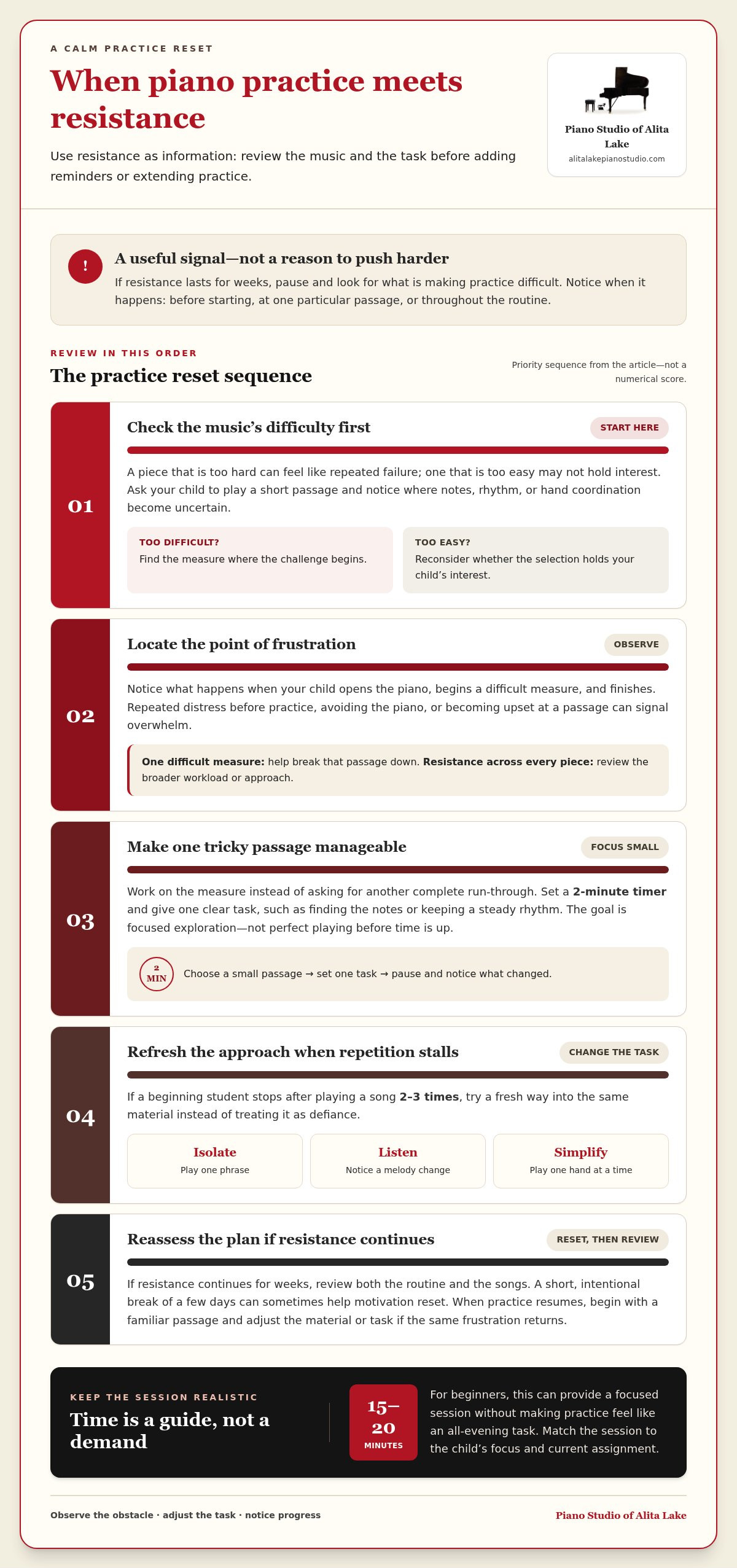
If resistance lasts for weeks, treat it as useful information. Look for the source before adding reminders or extending practice. Is the assignment unclear? Does a passage feel frustrating, or does your child seem tired before starting? A small adjustment can make the next session more approachable. Notice what happens when your child opens the piano, begins a difficult measure, and finishes practicing.
Signs that your child feels overwhelmed can include repeated distress before practice, avoiding the piano, or becoming upset at a particular passage. Notice whether the reaction centers on one assignment or occurs throughout the routine. A child resisting one difficult measure may need help breaking it down; resistance to every piece may call for a broader review of the workload or approach.
Check the music’s difficulty first. A piece that is too hard can make each attempt feel like failure, while an overly easy selection may not hold your child’s interest. Ask them to play a short passage, then notice where the notes, rhythm, or hand coordination become uncertain. If the challenge begins at one measure, work on that measure instead of asking for another complete run-through.
For a tricky measure, try a brief timer challenge. Choose a small passage, set a timer, and give your child one clear task, such as finding the notes or keeping a steady rhythm. The goal is focused exploration, not perfect playing before time is up. Then pause and notice what changed. A clear endpoint can feel more manageable than an open-ended instruction to keep practicing.
Some beginning students stop after playing a song 2-3 times. Instead of treating that as defiance, find a fresh way to approach the same material. The child might isolate a phrase, listen for a change in melody, or play one hand at a time. Beginners may practice for 15-20 minutes, but the session should still match the child’s focus and current assignment.
If resistance continues for weeks, review both the practice plan and the songs. A short break from practice can sometimes help reset motivation. Make the pause intentional, rather than treating it as punishment or a test of commitment. When practice resumes, begin with a familiar passage and reassess the difficulty. If the same frustration returns, adjust the material or task instead of repeating the same demand.
When resistance lasts for weeks, use it as a reason to review the approach rather than continuing unchanged. Reconsider the songs alongside the routine: a selection that is too difficult or too easy may be making practice unwelcome. Base the adjustment on what your child is encountering, so the next attempt feels focused and manageable.
For a tricky measure, a 2-minute timer challenge offers a bounded way to work on that passage. If motivation still needs room to recover, a break of a few days can sometimes help reset it. Afterward, return attention to the approach and the song difficulty, and make a change if resistance continues.
2. Choosing music children already enjoy
A child is more likely to approach the piano when a piece connects with something they already enjoy. Ask what music they choose in the car, hum at home, or recognize from a favorite film. Their answers can guide you toward songs that feel personal rather than randomly assigned.
Start with a familiar melody. It could be a film theme, a song heard at school, or a tune the family enjoys together. The exact piece matters less than your child’s recognition and interest. Ask them to name the part they like, such as the opening rhythm or the way the melody rises. That detail can shape the first practice goal.
A favorite recording can also help your child get familiar with a piece. Play it during an everyday activity, such as drawing or getting ready, then talk about what they hear. Invite them to notice repeated sections, changes in volume, or a melody that returns. Listening gives them a musical picture to connect with the notes at the piano.
Choose arrangements that suit your child’s current reading and coordination. A favorite song can still feel discouraging if the written version is too difficult. Look for a manageable melody, a clear rhythm, and a suitable starting point. If the full arrangement feels out of reach, focus on its opening phrase or a recognizable melodic fragment. Your child can experience progress while keeping the music they care about in view.
Keep a small selection of suitable pieces available and let your child choose which one appeals that day. They may prefer a lively tune one day and a calm melody the next. You can also offer two options: “Would you rather play the film theme or the song you heard at school?” This makes their preference part of the decision without turning music selection into an argument.
Enjoyment doesn’t mean setting musical learning aside. A familiar melody can support listening, rhythm, phrasing, and note recognition. Ask your child to tap the beat before playing or find where the melody repeats. These focused tasks connect curiosity with musicianship. If your child enjoys making up music, invite them to change the ending or create a short response to the tune.
Let interest guide the selection, then shape the task around the child’s current ability. That balance helps practice feel connected to their musical world. Music theory and composition instruction can also help children explore how melodies and musical ideas work.
3. Giving children choices within clear boundaries
Your child can have a say without deciding whether practice happens. Set the expectation calmly, then offer choices within it. For example: “Practice is part of today’s plan. Would you like to start with your lesson piece or your favorite song?” The boundary stays clear while your child controls the first step.
How can parents set piano practice expectations with a child and teacher? Agree on a clear, realistic goal with your child and teacher, including what your child will work on between lessons. Ask the teacher to clarify the assignment and explain what focused practice looks like at home.
Keep choices specific and manageable. “What do you want to practice?” can feel too broad, especially when a child sees several pages of music. Instead, offer two options from the assigned work: “Would you like to play the new melody first or review the rhythm?” Both choices support the lesson plan.
You can also let your child choose the order of assignments. If the teacher assigned a scale and a song, ask which should come first. Your child isn’t choosing to skip either task, just how to begin. This small decision can replace repeated reminders with a direct, respectful invitation.
How can parents support piano practice while avoiding power struggles? State the expectation once, offer a limited choice, and avoid debating the boundary. If your child refuses, stay calm and return to the agreed plan instead of turning the piano bench into a contest.
A simple script can keep the conversation neutral. Try: “It’s time for piano. Would you like to sit down now or after you put away your book?” Then follow through without adding a string of warnings. Your child chooses how to transition, while you maintain the practice expectation.
Make the assignment visible, too. A short note beside the music can identify the piece, passage, and goal. For instance: “Play the left-hand pattern, then combine both hands.” Your child can see what to do, and you won’t need to interpret every instruction.
When your child and teacher set expectations together, you can reinforce the same language at home. If the teacher asks for careful rhythm, praise attention to the beat rather than demanding a polished performance. Clear choices, shared goals, and calm follow-through keep responsibility with your child without making practice a daily argument.
4. Making piano practice part of a daily routine
Choose a regular time for piano, such as after a snack or homework. Practicing at the same time each day makes the routine easier to remember. Connect it to an existing habit: finish homework, clear the table, then sit at the piano. A familiar sequence reduces decisions about when to begin.
How much practice is appropriate for children by age and skill level? Beginners can practice 15-20 minutes, with the task and pace suited to their current skill. Rather than setting a longer session simply because a child is older, match practice to the lesson assignment and their ability to stay focused.
Set a practical weekly rhythm that fits family life. Practicing on 5 days per week gives a child regular opportunities to revisit lesson material between sessions. Mark the planned days on a family calendar, and choose times that don’t compete with meals, bedtime, or other fixed activities.
Should parents use a practice chart, timer, or piano practice app? A simple chart can show which days practice happened, while a timer can give one focused task a clear endpoint. Choose the tool that helps your child begin, rather than adding another complicated routine to manage.
Make the first step visible. Place the music book on the piano and leave the bench ready before practice time. A note beside the assigned piece can say, “Start with the left hand,” or “Review the rhythm.” These cues help your child move from the family schedule to a specific musical task.
Try a predictable start-and-finish routine. Your child can open the book, review the teacher’s assignment, and choose the first piece. At the end, they can close the music and mark the chart. Repeating those steps gives the session a clear shape without requiring you to direct every moment.
Build flexibility into the calendar. If soccer practice or a school event disrupts the usual time, choose another suitable time that day. For a busy week, identify practice days in advance. A visible plan makes changes easier to discuss than a last-minute reminder.
Use the chart to notice patterns, not judge your child. If Tuesday practice is repeatedly missed after a late activity, move the session earlier or choose another routine cue. A steady schedule should support learning, not create guilt. Review the plan together and keep piano time predictable, manageable, and connected to your child’s lessons.
5. Praising effort rather than perfect performance
Children need to know which actions help them improve. Praise a specific effort, such as keeping a steady rhythm or trying a passage again. “You slowed down and found the correct notes” tells your child what worked. “You’re a genius” may sound warm, but it doesn’t identify a useful practice habit.
What rewards or incentives help children practice piano without creating pressure? Choose encouragement that recognizes consistency, curiosity, or persistence, rather than perfect playing. For example, celebrate a child who practices on 20 or more days in a month, without requiring every session to sound polished.
Give feedback while the effort is fresh. If your child repeats a difficult phrase, name the action: “You tried that left-hand pattern again.” If they notice an error and correct it, point out their attention. These comments connect practice choices with learning instead of treating mistakes as proof that the session went badly.
Be specific when praising progress. Instead of saying, “That was perfect,” try, “The rhythm stayed even through the whole phrase.” If a passage still needs work, acknowledge what improved and name one next step. For example: “You kept the melody moving. Now let’s listen for the pause.” This keeps feedback honest and manageable.
You can also ask your child to notice their own progress. After playing, ask, “What felt easier today?” or “Which part did you work through?” They might mention remembering a fingering or restarting calmly after a mistake. Reflection helps children recognize progress without relying only on adult approval.
A chart can support recognition when it records effort rather than results. Mark a practice day when your child gives focused attention to the assigned work. Avoid removing marks for wrong notes or missed days. A chart should make consistency visible, not become a scorecard that creates pressure.
Small, shared rewards can mark a meaningful milestone. Your child might choose the next family listening selection or play a favorite piece for someone at home. Keep the reward connected to music or shared enjoyment. Don’t make treats or privileges depend on flawless performance, which can make mistakes feel costly.
During a lesson, the teacher can help define a useful goal and identify progress. At home, echo that language with specific, sincere praise. Explore piano lessons for individualized guidance on practice goals, musical skills, and steady development.
Praise the choices your child can control: returning to a task, staying curious, and continuing when a passage is difficult. Recognize effort and persistence, rather than focusing only on perfect playing.
This approach leaves room to recognize improvement while keeping attention on learning. Your child can hear that their commitment matters, even while the music is still taking shape.
Piano Studio of Alita Lake: In-person Piano Lessons
Piano Studio of Alita Lake offers personalized piano instruction for children and adults of all levels, in person on the border of Palo Alto and Menlo Park, California, USA, and online through Skype, FaceTime, and Zoom. Each lesson plan is tailored to the student’s needs and level, with sight-reading, ear-training, repertoire, music theory, composition, and performance practice.
If practice keeps turning into conflict, a teacher can help clarify assignments and set suitable goals. Students can work on specific musical skills while parents support a more consistent routine at home. Music Theory and Composition Instruction can also help children explore how melodies and musical ideas are built.
Contact Piano Studio of Alita Lake to discuss piano lessons for your child.
Let Music Grow Beyond the Practice Bench
Progress in music involves more than completed assignments. Children also learn to listen closely, make choices, and keep working through challenging passages. Those habits can grow when practice connects with curiosity instead of becoming a daily test of compliance.
For parents wondering how to get a child to practice piano without nagging, keep the conversation open. Notice which parts of music capture your child’s attention and share those observations with their teacher. That insight can help shape lessons around both musical development and personal interest.
Piano study is a continuing relationship with sound, effort, and discovery. A supportive teaching environment can help your child build that relationship with care and thoughtful guidance. Explore piano study at Piano Studio of Alita Lake, and consider what kind of musical experience would help your child feel engaged. Each small step can make room for confidence, enjoyment, and lasting growth.
Frequently Asked Questions
What daily piano practice routine works for kids?
A useful routine gives each session a clear purpose and stopping point. Before starting, have your child name the piece or skill they’ll focus on. Afterward, ask them to identify one passage they understand better and one question to bring to their teacher. This reflection gives practice a beginning, middle, and useful follow-up, without turning it into a performance test.
How can parents motivate a child to practice piano without nagging?
Parents wondering how to get a child to practice piano without nagging can invite musical discovery instead of checking whether practice happened. Ask your child to teach you a rhythm, explain a symbol, or play an interesting part. Listening with genuine attention shows their work matters. If they don’t want an audience, let them describe what they’re learning or choose a piece to share another time.
How can parents make piano practice fun and engaging for kids?
Turn a musical idea into a listening game. Ask your child to play a short phrase, then guess whether it sounds playful, calm, or dramatic. They can change the dynamics or articulation and hear how the mood shifts. A toy audience or family concert can also give them a relaxed reason to perform, without making accuracy the only measure of success.
How should parents respond when a child refuses to practice piano?
Stay calm, acknowledge the refusal, and ask what is getting in the way. For parents wondering how to get a child to practice piano without nagging, listening first may reveal whether the child feels tired, confused, or worried about mistakes. If directions seem unclear, note the question for their teacher. Avoid turning the moment into a debate; revisit the practice plan when you can talk calmly.


