
Choosing piano lessons Redwood City students can attend involves more than finding the closest address. For families and adult learners, convenience matters, but so does finding instruction that fits the student’s experience, interests, and goals. Comparing in-person and online lessons can help you decide which setting works best for regular study.
Piano Studio of Alita Lake offers private piano instruction for children and adults, with in-person lessons at its studio on the Palo Alto and Menlo Park border and online lessons through Skype, FaceTime, and Zoom. Lessons can cover more than individual songs: the curriculum is tailored to each student’s level and may include sight-reading, ear training, music theory, composition, and performance practice.
This guide compares lesson formats, learning goals, and local access to help you choose a practical starting point. You’ll learn what studying at the nearby studio or online can involve, how lessons can suit beginners and experienced players, and what to consider before starting.
Key Takeaways
- Compare travel, home setup, and learning preferences to choose between the nearby studio and online lessons.
- Explore how piano lessons Redwood City students can pursue may support goals beyond learning individual songs.
- See how sight-reading, ear training, theory, composition, and performance practice build broader musical understanding.
- Use the student’s age, experience, and interests to identify useful lesson priorities.
- Prepare for lessons by noting the student’s goals, current experience, and preferred format.
Piano Lessons in Redwood City: Start by Matching Instruction to Your Goals
Choosing piano lessons in Redwood City starts with three practical questions: what does the student want to learn, what experience do they already have, and which lesson format fits their routine? The answers help define useful lesson priorities, whether the student is building a foundation, returning to piano, or developing existing skills.
Alita Lake Piano Studio holds in-person lessons at its studio on the Palo Alto and Menlo Park border. Students from Redwood City can also take online lessons from home through Skype, FaceTime, or Zoom. Consider the trip to the studio, the home learning setup, and which environment helps the student focus when choosing a format.
Lesson planning is a thoughtful process. The teaching of piano is often described as Piano Pedagogy. A useful starting point is to match the student’s goals with relevant skills, then choose a setting that makes regular study practical. These questions can help make that decision more specific.
Which piano goals can private lessons support?
A beginner may want to learn to read music and coordinate both hands. Someone returning to piano might revisit familiar repertoire while rebuilding comfort with the instrument. A more experienced player may want to explore expressive performance, composition, or deeper musical concepts. The student’s interests and current level help determine which skills to emphasize. Focused, individualized instruction supports learning over time, rather than promising quick results.
What does a good lesson fit look like?
Consider the learning environment alongside the musical goal. Is travel to the studio realistic, or would an online setup at home make lessons easier to maintain? Age alone does not define readiness or potential. A student’s interest, attention, and willingness to engage are also useful considerations. Parents can think about what their child enjoys and what routine feels manageable. Adult learners can identify what they want to play and how piano study fits their schedule.
Before comparing curriculum and lesson formats, note the student’s needs:
- Goal: Name a musical interest, such as learning to read music, returning to piano, or developing performance skills.
- Experience: Describe what the student has studied or played so far, including any time away from the instrument.
- Format: Compare the nearby studio with online lessons, taking travel and home learning preferences into account.
This overview gives lessons a useful starting point without locking the student into a fixed path. It also makes it easier to consider how instruction can respond to different ages, skill levels, and interests. Next, look at what a tailored curriculum can include beyond individual songs.
What Alita Lake Piano Lessons Can Include, Beyond Learning Songs
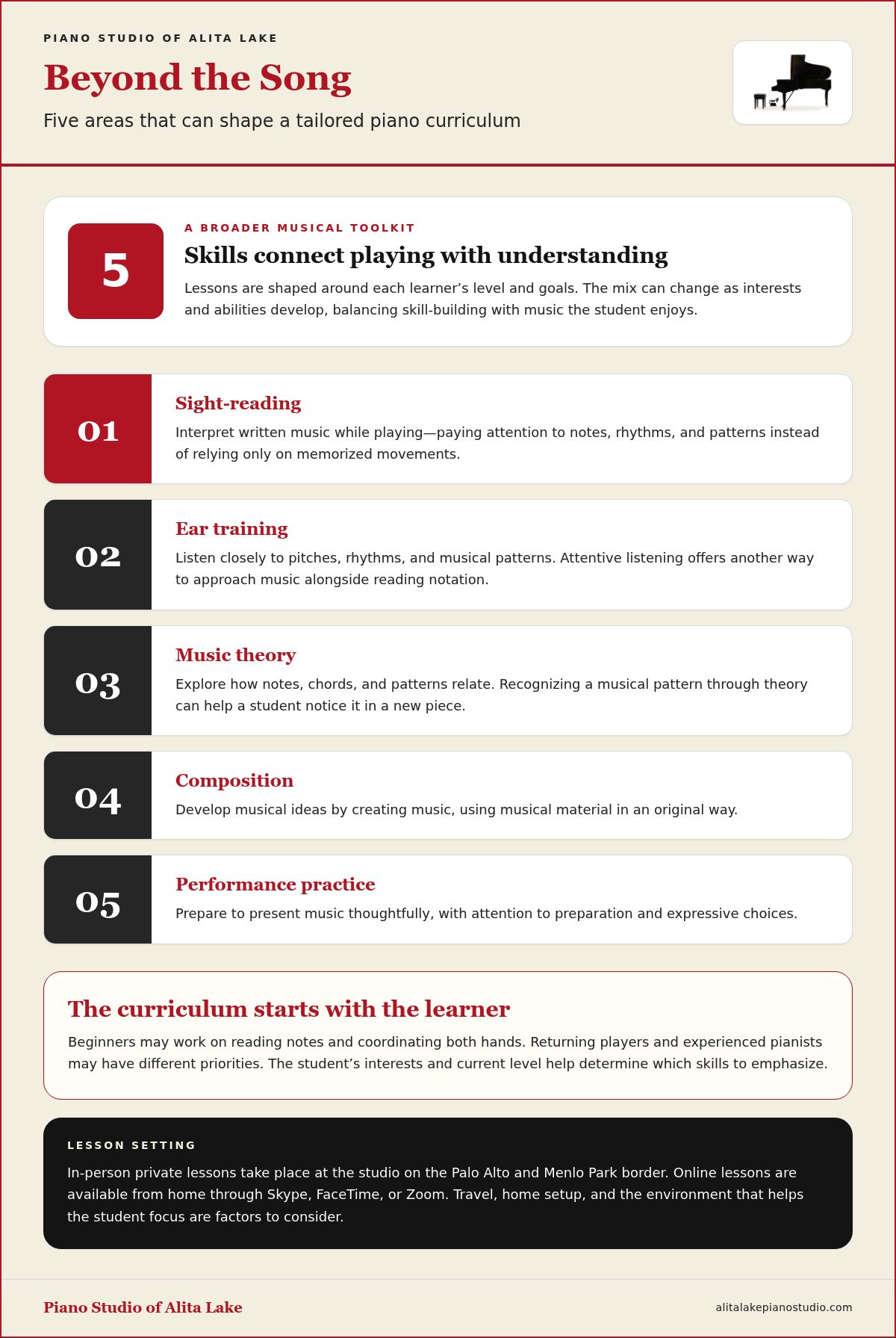
A tailored piano curriculum connects the music a student wants to play with the skills that help them understand it. At Alita Lake Piano Studio, instruction is shaped around the learner’s level and goals. A beginner may focus on reading notes and coordinating movement, while a returning player or experienced pianist may have different priorities. Lessons balance skill-building with music that interests the student.
That balance helps students understand music rather than treating each piece as a task to memorize. Depending on the learner’s level and priorities, piano instruction can include:
- Sight-reading: Practicing how to interpret written music while playing.
- Ear training: Listening closely to pitches, rhythms, and musical patterns.
- Music theory: Exploring the structure and relationships behind notes and chords.
- Composition: Developing ideas by creating music.
- Performance practice: Preparing to present music thoughtfully and with confidence.
These areas can reinforce one another. For example, recognizing a musical pattern through theory can help a student notice it in a new piece. Ear training encourages attentive listening to sound and phrasing. The mix can change as interests and abilities develop, connecting musical foundations with personal curiosity.
How sight-reading and ear training build musical understanding
Sight-reading means interpreting unfamiliar written music and playing it as you read. It encourages students to notice notes, rhythms, and patterns on the page rather than relying only on memorized movements. Ear training develops the ability to listen closely to musical sounds and patterns. Together, these skills offer complementary ways to approach music: through notation and through attentive listening.
Where music theory, composition, and performance practice fit
Music theory gives students language for understanding how music is structured and how notes and patterns relate. Composition offers a creative way to explore those ideas by shaping musical material into original work. Performance practice focuses on preparing and communicating a piece, including thoughtful preparation and expressive choices. These subjects can support piano study at different levels, with emphasis guided by the student’s goals and experience.
For students and families considering piano lessons Redwood City, this broader view helps clarify what they want from instruction: a foundation in reading, a return to regular playing, or room to explore creative and performance interests. Alita Lake’s private lessons bring these learning areas into a curriculum suited to the student’s level. Visit Alita Lake’s piano instruction to learn more.
In-Person or Online Piano Lessons for Redwood City Students?
For students considering piano lessons in Redwood City, access often comes down to traveling to a nearby studio or learning from home. Alita Lake Piano Studio offers both formats. The better fit depends on the student’s learning preferences and the practical shape of their routine.
The in-person studio is on the Palo Alto and Menlo Park border. Online lessons offer another way to study with Alita Lake through Skype, FaceTime, and Zoom. Compare the settings based on travel, focus, and the home setup needed to take part comfortably.
When the nearby Palo Alto-Menlo Park studio may suit you
In-person lessons involve traveling from Redwood City to the studio near Palo Alto and Menlo Park. Consider how the trip fits with school, work, or family routines, and whether the student prefers learning in a dedicated studio setting. For more local context, this professional piano lessons guide for Menlo Park and Palo Alto discusses instruction in the neighboring communities.
When online piano lessons may fit your routine
Online lessons let students learn from home rather than traveling to the studio. Alita Lake teaches remotely through Skype, FaceTime, and Zoom. Consider whether the student has a piano or keyboard available, a quiet place to focus, and a device setup that allows them to participate comfortably. Home may be a convenient and familiar setting, while other students may prefer to separate lesson time from home activities.
Compare the formats using these questions:
- Travel: Does a trip to the studio fit naturally into the student’s routine?
- Learning environment: Does the student focus better at a studio or in a familiar home setting?
- Home setup: Is there an instrument and a comfortable place for online instruction?
- Consistency: Which arrangement seems easier to maintain as part of regular study?
These are practical considerations, not measures of musical ability. A student’s goals, engagement, and instruction matter alongside the lesson format. A young beginner, an adult returning to piano, and an experienced player may each prefer a different setting. Choose the option that helps this student participate attentively and make lessons a sustainable part of life.
Once you have weighed location and learning environment, connect that choice to the student’s musical priorities. Explore Alita Lake’s piano lessons and consider which format and learning goals are the best fit.
How Lessons Adapt to Children, Adults, and Different Skill Levels
Age and experience provide useful context, but they do not determine what a student can explore at the piano. Alita Lake Piano Studio offers private instruction for children and adults, with a curriculum tailored to each student’s level. A child curious about favorite melodies and an adult returning to music after a long break may need different starting points, even if they share a goal.
A tailored piano curriculum connects what a student can do now with the musical goals they want to pursue. Use this sequence to organize those goals before lessons begin:
- Identify goals: Name what the student hopes to learn, from building fundamentals to exploring composition or performance.
- Describe experience: Share what they have played, studied, or found challenging so far.
- Choose a format: Consider whether in-person or online instruction suits the student’s learning environment and routine.
- Discuss priorities: Identify skills or musical interests that could shape the curriculum.
What parents can consider for a young piano student
For a child, consider their interest in music, ability to focus during instruction, and willingness to practise between lessons. A favorite piece can provide a motivating starting point, while sight-reading and musical listening develop skills beyond that selection. Parents can notice what encourages their child to return to the piano without expecting a particular pace of progress.
These observations can help describe a child’s needs and interests without setting a fixed expectation for readiness. Some children may be eager to explore new music; others may enjoy connecting foundational work to pieces they already know. Individual instruction allows those priorities to inform lesson planning as the student develops.
How adults and returning students can set useful goals
Adults can begin by naming what draws them to piano study now. They may want to learn a particular style, revisit pieces from earlier lessons, or explore music theory and composition. Describing prior experience, including what feels familiar or rusty, helps establish a starting point. Lessons can then be tailored to existing skills and the learner’s aims.
Goals can include more than technique. An adult may want to strengthen sight-reading while developing an expressive performance, or combine piano study with creative work. Returning students can mention what they enjoyed before and what they would like to approach differently. Clear priorities connect skill development with personally meaningful music.
For families and adults considering piano lessons Redwood City, this planning process makes the first conversation more focused. Bring a few notes about goals, experience, preferred format, and learning priorities. Explore piano lessons with Alita Lake and take the next step toward a student-centered plan.
Take the Next Step Toward Piano Lessons in Redwood City
Before beginning piano lessons in Redwood City, turn your comparisons into a clear starting point. You do not need a detailed plan. A few notes about what the student enjoys, what they have studied, and how they prefer to learn can help shape a purposeful first conversation about instruction.
A simple checklist before getting started
Use this checklist to gather information that can guide lesson priorities. The answers can be brief; the goal is to identify what matters most to the student right now.
- Musical interests: Note favorite pieces, styles, or broader aims, such as learning to read music, returning to piano, composing, or preparing to perform.
- Current experience: Describe what the student has played or studied, any previous lessons, and skills they would like to strengthen.
- Preferred format: Consider whether traveling to the studio on the Palo Alto and Menlo Park border fits the routine, or whether online lessons would be more practical at home.
- Learning priorities: Think about meaningful areas such as sight-reading, ear training, music theory, composition, repertoire, or performance practice.
This preparation is not a test, and students do not need to have everything figured out. Interests may change as they explore piano study. A simple starting point connects instruction to the learner’s experience while leaving room for new goals.
Explore lessons with Alita Lake Piano Studio
Alita Lake Piano Studio provides private piano instruction for children and adults, in person and online. In-person lessons take place at the studio on the Palo Alto and Menlo Park border. Online lessons are offered through Skype, FaceTime, and Zoom, giving Redwood City students another way to study. Lesson content is tailored to each student’s level and can connect piano skills with interests such as theory, composition, and performance practice.
As you consider an approach, focus on what will help the student engage consistently: a meaningful goal, an appropriate starting point, and a format that works with everyday life. A child may be motivated by a favorite piece, while an adult might want to reconnect with music or explore a creative challenge. Neither needs a complete musical roadmap before starting. The student’s goals can guide the curriculum as learning develops.
If you have identified a few priorities, you are ready for a practical next step. Explore piano lessons with Alita Lake and consider how private instruction can support the student’s musical interests and current level.
Let Your Musical Goals Take Shape
Choosing piano lessons Redwood City can begin a musical path without committing to one fixed destination. A student’s interests may shift as they encounter new pieces, skills, and creative possibilities. Start with a simple question, such as what they would most like to play or understand, to make the next step feel manageable.
It is fine if the answer is still taking shape. Curiosity, a favorite melody, or the wish to return to an instrument can all provide a starting point. As students discover what they enjoy, those experiences can help guide new goals and keep learning personally meaningful. Begin with a direction that feels inviting, then let experience inform what comes next.
If you are ready to explore an individualized approach to piano study, explore piano lessons with Alita Lake. A thoughtful first step can open the door to musical growth, one lesson and one discovery at a time.
Frequently Asked Questions
Do I need to own a piano before starting piano lessons?
You do not necessarily need to own a piano before beginning, but regular access to an instrument makes it easier to revisit what you study between lessons. If you are deciding what to use, consider your space, budget, and whether a piano or keyboard is a practical fit for home practice. For students taking piano lessons in Redwood City or nearby communities, planning for consistent instrument access is a useful early step.
How often should a piano student practise between lessons?
Consistent practice is generally more useful than waiting for one long session. Choose a manageable routine that fits school, work, or family life, then focus on a specific task, such as slowly working through a difficult passage or reviewing a rhythm. Notice what feels sustainable rather than setting an unrealistic target. The routine can develop as the student’s skills and lesson assignments change.
How often should someone take private piano lessons?
Lesson frequency depends on the student’s goals, schedule, and how much guidance they find helpful. Regular lessons provide opportunities for feedback and setting practice priorities, while the time between meetings lets the student work independently. A beginner may need a different structure from someone returning to advanced repertoire. Choose a cadence that supports steady study and leaves room for practice between lessons.
Can adults start piano lessons without previous experience?
Yes, adults can begin piano lessons without previous experience. Adult learners may bring clear interests, such as learning to read music, playing for personal enjoyment, or exploring composition. There is no need to compare your starting point with another student’s. Lessons can build from what you know now, with your interests helping shape which skills receive attention as you learn.
How can parents help a child stay engaged with piano practice?
Connect practice to the child’s interests rather than treating it only as a task to complete. Ask them to choose a passage they enjoy, notice a detail they are proud of, or explain what they are working on. A calm, predictable practice routine can also make it easier to begin. If a child feels stuck, encourage a slower attempt or a short break instead of turning the moment into a test.
What should I prepare before my first piano lesson?
Bring a few notes about the student’s musical interests, previous experience, and what they hope to explore. If they have studied before, mention pieces or skills they remember and anything they found challenging. Students in Redwood City, Atherton, Menlo Park, and Palo Alto can also consider which lesson format suits their routine. You do not need polished answers; a clear starting point is enough.
Ready to discuss your goals and lesson format? Explore private piano lessons with Alita Lake Piano Studio.


